


In the 21st century, value isn't declared. It's built layer by layer, over time, based on what the brand represents to people.
The paradox of excess
There have never been so many good products on the market. There has never been so much information available to compare them. And yet, it has never been so difficult for brands to justify why someone should pay more.
This is the central paradox of branding In the 21st century, the abundance of products, stimuli, and options has not created more choice. It has created more indifference. And brands that sell high-ticket items They are the first to feel the impact: when everything seems good, the high price needs another justification besides quality.
The question this scenario poses for organizations, branding managers, and communication professionals is not how to sell more. It's a broader question: what, today, makes a brand genuinely rare?
In the past, value lay in a sense of scarcity. Today, value lies in what is rare. And what is rare is intangible: trust, values, meaning.
The new role of organizations in social life.
There is a structural transformation underway that goes beyond consumer behavior. In the 21st century, organizations are taking on a role that previously belonged to other institutions: that of a trusted point of reference in a society marked by uncertainty.
O 2025 Edelman Trust Barometer It accurately documents this movement: for the first time, companies emerge as the most trusted institution globally, surpassing government, media, and NGOs. And 63% of consumers say they buy from or boycott brands. based on the social positions they adopt.
This data doesn't just reflect a change in behavior. It reflects a change in expectations. High-value brands They are no longer evaluated solely by what they deliver. They are evaluated by what they represent, by the set of values, worldview, and impact they demonstrate over time.
For the communication, This changes the logic of the narrative. It's not just about presenting unique selling points or building aspirational stories about the product. The value lies in consolidating the brand with a... relevant asset: to position the brand as an organism with clear values, cultural presence, and the ability to generate Trust as a key differentiator..
Branding is about building value for people, not managing an image.

Ana Couto, CEO of Anacouto, puts the central challenge of contemporary branding To be precise: building value for people and organizations in a liquid and fluid world. This formulation is more demanding than it seems.
Building value for people means that the ultimate goal of branding is not market perception, but relevance in the real lives of those who interact with the brand. And in a fluid world, where references change, loyalties fragment, and attention is scattered, this construction requires continuity and depth that go far beyond one-off communication.
To luxury brands, This logic is even more crucial. When the price requires justification, and high-value products They always demand it; the brand needs to have built, before any commercial conversation, a context in which value is relevant. It's not sold. high ticket It sells solely through product arguments. It sells through the consistency of who the brand has become over time.
Performance, aesthetics, or a stated purpose are not enough. Organizations are living organisms, and high-value brands need to demonstrate this at every touchpoint.
It Is, It Does, and It Speaks: The architecture that sustains high-value organizations.
At Anacouto, we've developed a methodology based on a simple yet powerful premise: an organization's power lies in what it does. É, He does e He speaks. And, in most brands of high ticket, However, these three layers are rarely aligned with the precision that the market demands.
"É" is the starting point. It's the power to identify who the brand truly is: its DNA, its personality, the gaps between what it believes itself to be and what the market actually perceives. For luxury brands, This diagnosis is especially critical: when the price is high, any inconsistency between the stated personality and the perceived personality creates noise that no campaign can cover. The brand needs to know who it is before stating its value.
Faz is where value becomes tangible. This refers to the value proposition and the customer experience journey that the brand delivers to delight the customer and make them want to return. branding for luxury brands, Experience is not an operational detail. It is the main driver of building perceived value. Hermès doesn't justify its price solely with excellent craftsmanship: it justifies it with every point of the journey, from customer service to packaging, which confirms what the brand promised to be. The "Do" is where the discourse becomes reality.
Fala is where the brand makes its value visible and engaging. It's not just about communicating unique selling points; it's about influencing perceptions and winning over the audience before any sales process even begins. luxury brands, Fala is the work of building, over time, the high-value narrative which makes the price self-evident. When the "Says" is aligned with the "Is" and the "Does," communication ceases to be an effort to persuade and becomes a confirmation of what the market already feels.
Brands that don't know who they are try to compensate with communication. Brands that know who they are use communication to amplify what already exists.
Territories of communication: where positioning materializes
Clarity about "Is," "Does," and "Says" is not enough if there isn't a concrete platform for execution. This is where the... communication territoriesThe cultural, thematic, and relational spaces that the brand chooses to occupy in order to materialize its purpose in the world.
Territory is not a campaign theme. It's the space where the brand has the right and authority to speak, because its personality, values, and delivery underpin that presence. high standard positioning, Choosing the right territories is one of the most important strategic decisions: it defines where the brand invests its attention, with whom it builds partnerships, what type of content it produces, and which conversations it decides to engage in.
A brand of high ticket Those who occupy territories consistent with their personality accumulate authority over time. Each action within those territories reinforces the same associations, deepens the same perceptions, and strengthens the... Trust as a key differentiator. that the high-value market demands. The opposite — a dispersed presence in multiple territories without a common thread — dilutes the perceived value as an asset and transforms the brand into just another voice in an environment already saturated with stimuli.
To high-value brands, the high-ticket sales funnel It starts right here: with the consistency between who the brand is, what it delivers, and where it chooses to appear. When these three layers are aligned, the conversion into premium products It ceases to depend on sales pitches and becomes the natural conclusion of a relationship of trust built over time.
Flamboyant Group: From rebranding to business impact
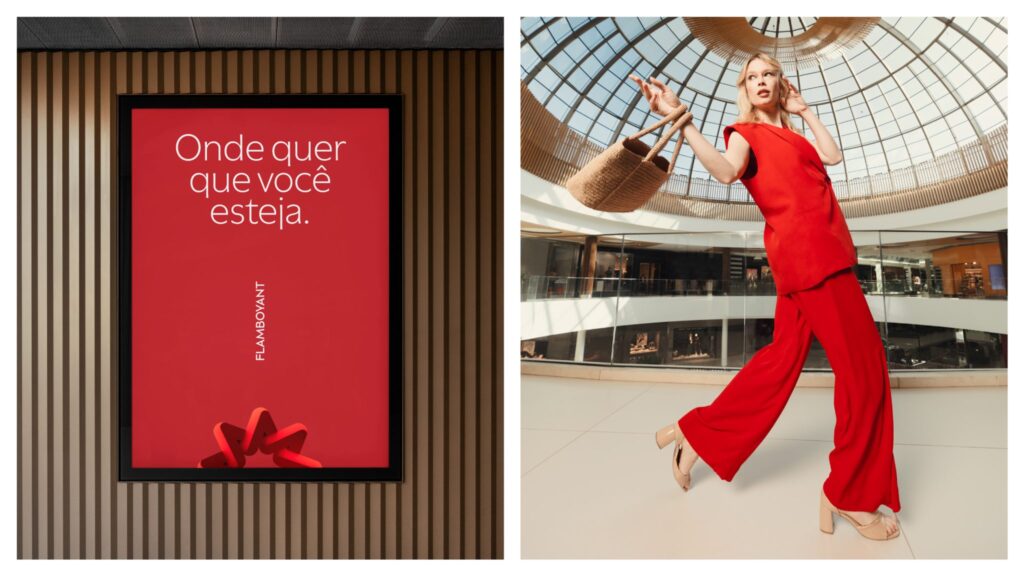
The story of Flamboyant Group This reflects how luxury branding can solidify a legacy and drive the continuous evolution of a high-ticket organization. From its roots in the agricultural sector, the Louza family has always been a pioneer in the pursuit of excellence and innovation. When we took on the mission of strengthening the... branding and communication strategy From the group, we focus on building a visual and verbal universe that would translate the values and history of Goiânia, a proprietary and distinctive narrative to generate an emotional connection with their audiences and, in the business context, to make their experience consistent through portfolio management.
The purpose “"Elevate to Evolve, Engage to Enchant"” This was the guiding thread for building and sustaining the meaning of an organization that Is, Does, and Speaks. We developed a branding platform which expresses the sophisticated balance between tradition and modernity, preserving the original symbol of the flamboyant flower and refining it to stand out in both physical and digital media. The brand began operating with consistent and relevant value management, expanding its relevance and authority in the high-ticket market and reaffirming its leadership in the Goiânia market.
Click and check out the full case study.
The rare as a strategy
In a market with an abundance of products and a scarcity of trust, what differentiates... luxury brands It's not just the product. It's the ability to build something that the market can't replicate quickly: a consistent worldview, a set of lived values, and a relationship of... Trust as a key differentiator. built over time.
Brands that understand this stop competing for attention and start building meaning. Beyond just selling. high-value products and services, They then go on to build living organisms: with culture, with a position, and with the ability to mobilize people who don't just want to buy, but to belong.
What's rare today isn't in exclusivity as a strategy It's about scarcity. It lies in the depth of what the brand represents and its proprietary way of expressing itself. And it is precisely this difference that transforms. perceived value as an asset strategic and relevance gaining a competitive advantage over time.
Is your organization sustaining meaning over time?
Building consistent perceived value requires accurate diagnosis, clear positioning, and a narrative that the market recognizes as relevant and proprietary. If this reflection touched on something your brand hasn't yet clearly addressed, perhaps it's the right time for a conversation.

